
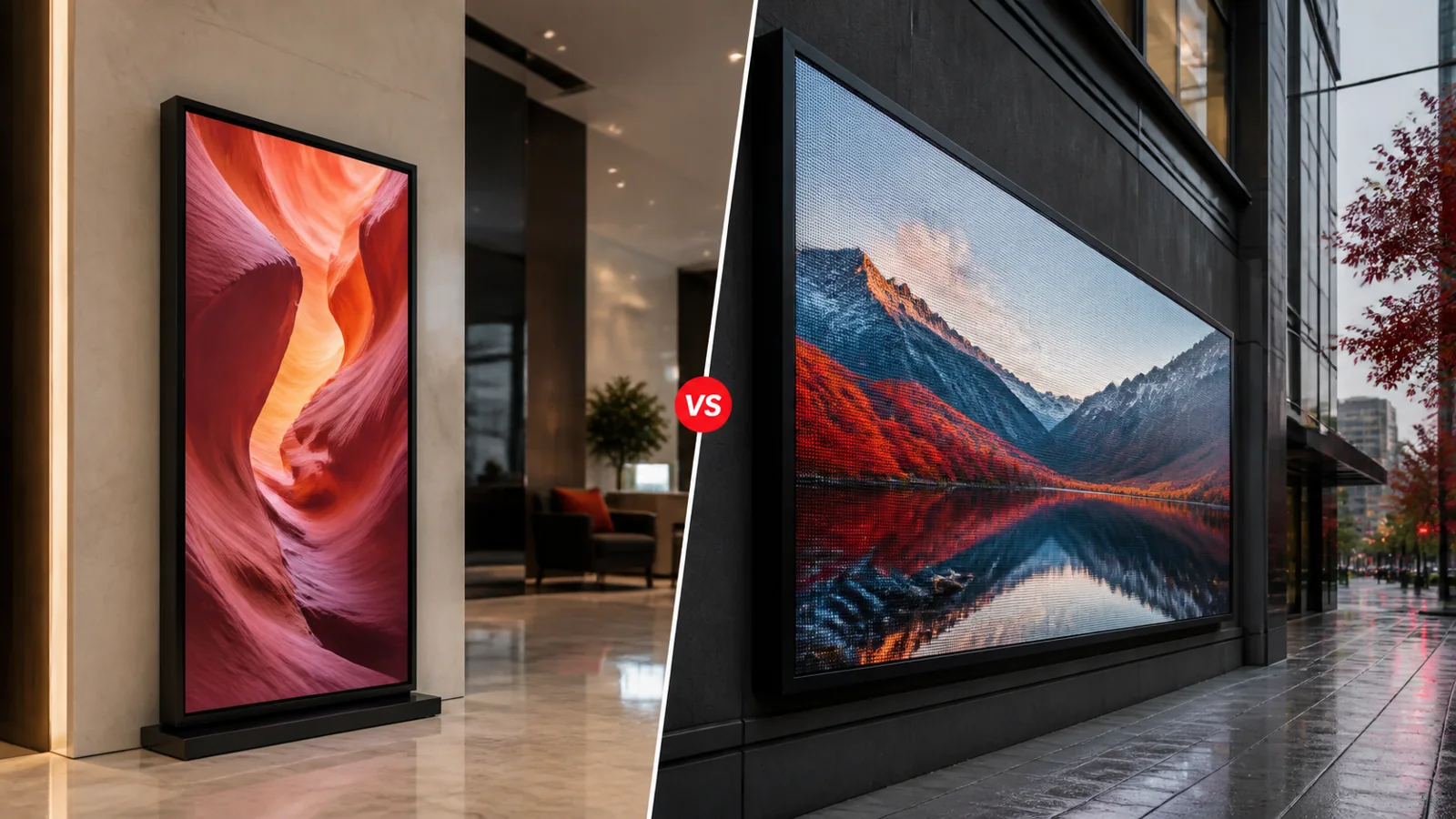
The core technology difference
An LCD uses a liquid-crystal panel with a backlight and comes as a finished screen. Direct-view LED creates the image from individual light-emitting pixels assembled into modules or cabinets. This makes LED highly scalable, while LCD offers predictable resolution and a familiar form factor.
Viewing distance and image detail
LCD is often strong for close viewing because a standard panel delivers a dense pixel structure. LED is selected by pixel pitch: smaller pitch supports closer viewing but generally increases system cost. The correct decision starts with the closest and typical viewing distances.
Brightness, size and shape
High-brightness LCD can perform in windows and selected outdoor enclosures. Direct-view LED is frequently chosen for very large façades, stages, concourses and curved or custom shapes. Ambient light, required image size and architectural integration should be assessed together.
Installation and lifecycle planning
LCD projects may use wall mounts, stands or multi-panel video walls. LED needs structural, electrical, controller and service-access planning. Compare the complete installed system, content workflow, maintenance route and intended lifespan—not only the display purchase price.
Next step
Turn the general guidance into a project brief by recording the site, audience, viewing distance, ambient light, operating hours, content sources, connectivity, mounting and support needs.