
Placement and sightlines
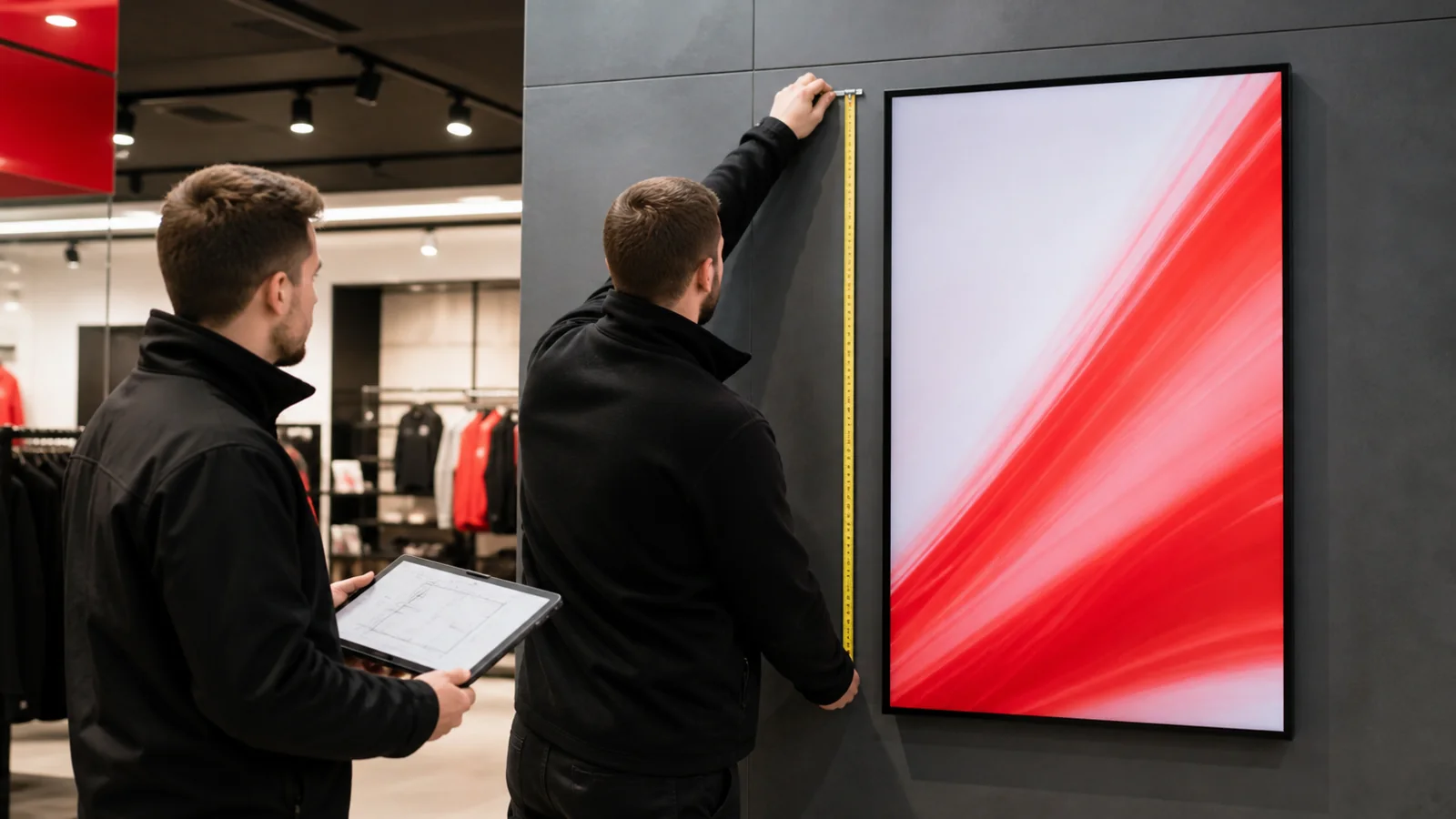
Check who needs to see or touch the display, from where and for how long. Avoid obstructions and reflections, confirm the mounting height and consider accessibility. Screen size and content type should be appropriate for the viewing distance.
Structure, power and connectivity
Verify the wall, stand or supporting structure and the proposed fixing method. Confirm electrical supply, isolation, data connectivity and cable routes. Outdoor and public installations may require additional protection, approvals and engineered structures.
Environment and service access
Ambient light, temperature, moisture, dust, airflow and exposure influence product selection. Leave practical access for cleaning, diagnosis and component service. A beautiful installation that cannot be maintained will become expensive over time.
Commissioning and handover
Prepare content before installation, test orientation and playback, confirm network access and record equipment identifiers. Handover should explain operation, support routes and the people authorised to publish or approve content.
Next step
Turn the general guidance into a project brief by recording the site, audience, viewing distance, ambient light, operating hours, content sources, connectivity, mounting and support needs.